Tuesday, 14 November 2017

Titanic - About time too

It took me a long time to get there, but give me a lazy Saturday evening in and a Netflix subscription and I'll end up watching anything.  For the first time in my life last Saturday, I watched Titanic.

Titanic is of course James Cameron's 1997 critically and commercially-acclaimed blockbuster.  The film launched the careers of Kate Winslet and Leonardo DiCaprio into the A-list, from which they have never come down.  At the time of production it was the most expensive film ever made, and remains in the (inflation-adjusted) top three 20 years later.  Adjusted for inflation, Titanic is the 4th highest grossing film of all time.  It won 11 Oscars, and has been watched repeatedly by my girlfriend, my mother, my sister and I imagine by most of the rest of the world multiple times before I finally got around to it last weekend.  In short - I am going to assume you know what Titanic is.

You will know the plot too of course.  Kind of like Towering Inferno meets Romeo and Juliet, Titanic tells the story of high society's Rose (Winslet) and free spirited ne'er-do-well Jack (DiCaprio) meeting and falling in love aboard the doomed passenger liner.  Her family don't like it, but they don't care.  Then the story almost comes to a head with Rose' evil betrothed trying to kill Jack, then a massive iceberg tries to kill them all.  For 3 hours.

It's a strange film to watch.  Mostly because you know what's going to happen, and the fact that this knowledge renders large portions of the second act's plot irrelevant.  The film's third act is when the ship actually sinks.  This starts after 105 minutes - still over 100 to go.  The tone here is very strange.  On the one hand the film feels like Towering Inferno on a boat, with crashing waves, exploding windows, plates hurtling down from shelves and people falling to presumed far away deaths.  However on the other hand the film tries to remember that this was a real disaster, and upon its release survivors were still alive.  The cutting back and forth between genuine heartfelt tragedy and tragicomic disaster schlock is off-putting.

20 years on and the special effects still look amazing - the huge budget was not wasted and the strange tone does nothing to detract from one's ability to marvel at the technical achievement on screen.  Aside from a few moments of CGI early on when the ship is in harbour, the fact that real sets were used is a lesson to film makers of the current and future eras.  Cameron famously pushed the envelope with the creation of his movable replica of the ship, hundreds of extras, gallon upon gallon of water and his furious temper asserting that everything should be exactly the way he wanted.  The result is a technical marvel that in the current era of cheap CGI will rarely be attempted again.

The plot's main driver is Jack's fate.  We know that Rose survives the disaster as the whole story is told from the point of view of old Rose in the modern era.  Does Jack survive and live happily ever after with her?  Nope - but then you and everyone else in the world already knew that.  I'm not going to be a cynic here.  The love story is genuinely touching and well put-together.  Add in two incredibly charismatic actors, one insanely popular song layered over the soundscape, a huge great 'heart of the ocean' necklace metaphor, end on marriage in death, fade to white - bank $2 billion.  Easy right?  Well no, no it isn't.  Whatever you might of James Cameron, he is one of the most technically innovative film-makers of the last 30 years, and with Titanic he deserved his successes.

Well that's that gap in the film knowledge patched up.  Next?

Sunday, 8 October 2017

Goldeneye - Watching it again is weird

My girlfriend and I have recently over the last 6 months or so been rewatching all of the Bond films.  It hadn't really occurred to me that I had anything interesting to write about this before last week, when we finally arrived at the first Bond film I actually remember coming out.

Goldeneye was released in late 1995 after a hiatus of 6 years during which time various legal wranglings and confusion over who would take over the production of the Bond franchise stalled any filming.  Bond was successful then as it remains now, and after the quick-fire production of the Bond movies during the Moore / Dalton era it was considered quite a set back that it took so long to transition to the next actor to play the iconic role.

However from my point of view at the time this wasn't the case.  License to Kill was released in 1989, when I was 10 and before I was really aware of grown up films.  By the time I was aware that James Bond existed, the films that were already out seemed like an ever-present canon.  Time stretches forever when one is in one's teenage years, and since no Bond film was released for my entire secondary school education (Goldeneye was released just after I started my A Levels) it felt like something otherworldly.  A new Bond film?  But Bond films are a thing that were made in the past, not now!  Weird how a teenage mind world isn't it?

Of course it wasn't just this.  There are other reasons Goldeneye felt so different.  Looking back and re-watching the series it is even more clear.  This was the first Bond film to be made in the post-Soviet era, the first film with Judi Dench as 'M', the first in which someone uses the internet.  It really feels like Bond films were entering a new era.

The other thing I noticed when watching Goldeneye for the first time in probably 15 years last week, is just how much the plot doesn't really make any sense.  We open in Monaco with Bond being tested by an MI6 stooge, he races a mysterious woman in a Ferrari who he then flirts with in classic Bond trope stylee.  Bond then follows this woman for no reason other than that he's a bit of a stalker, and then she's involved in the theft of a helicopter, which is then used in the theft of the 'Goldeneye' device.  There's no real reason for Bond to be involved in any of this at all.  It then comes to pass that the ultimate point of having this device is to steal money, which is sort of a bit small fry really.

Notwithstanding this though, Goldeneye is a well-made film.  We have memorable characters, well-directed action sequences and exactly the right balance between danger and tongue-in-cheek.  The product placement is there, but not out of control. It checks off the Bond tropes nicely and does very well to handle the transition into the post-soviet era.  Making 'M' a woman is a nice way to encapsulate Bond's dissonance from a world now not sure what to do with its Cold War era spies.  Where does Bond fit in now the Russians are on side and casual sexism isn't considered acceptable any more?

Plus on top of all this, Goldeneye was one of the first films to ever involve a video game tie-in.  Talk about making a giant leap into a new world.  Goldeneye definitely isn't the best Bond film, but it is none-the-less a classic.

Tuesday, 26 September 2017

Get Out - comedy / thriller / horror. All that and more.

Took a rare trip to the cinema back in April (and rarer still these days that I am blogging about it - even if it is 5 months later).  I had a free weekday evening and so I did that thing that I do enjoy doing, watching a horror film in the dark at night.  Better still when one has to walk home at midnight in the dark.  All about there scares innit.

Get Out stars Daniel Kaluuya as Chris, a guy who has been going out with Rose (Allison Williams) for a few months.  Naturally Rose wants Chris to meet her parents.  However he is reluctant.  She is white, he is black; Chris is cautious about how they will react.  Rose's reassurances about her parents' ludicrous liberalism put Chris mostly at ease, but his nagging doubts aren't about to vanish at any point.  This is America after all, and race is as much an issue today as at any point in its history.  What could possibly go wrong?

The film continues into 3 acts, each with a very distinct tone.  We go from borderline cringe-comedy, to spooky mystery, to slasher horror, with the end of each act clearly signalling the transition to the next.  Everything is tied together with a playfully comic undertone as Chris stays in touch with his friend (comic relief) Rod throughout his entire time with Rose's parents.  From this we pretty much know that nothing can really happen to Chris as he navigates his way through the minefield of parental hyper-liberalism - Texas Chainsaw Massacre this is not.  One could criticise this as undercutting the horror elements of the story, but I think it actually helps create a playful tone that reminds us that horror films are meant to be entertainment.  Carefully done, it is possible to create a light tone around sinister ideas.  Black comedy is after all a thing, and Get Out is nothing if not that (but with a lot more horror).

I distinctly remember Kaluuya starring as the lead in the best episode of Black Mirror's original run back in 2011, but I can't recall seeing him in anything else.  A strong performance in both these roles surely sets him up for more work in the future.

My opinion is that this isn't quite the game-changing thriller is was billed as in some parts earlier this year, but it is an extraordinarily good horror / thriller.  Of particular note is the film's tone, which is shifting but well-crafted to great effect.  I await with great interest to see what writer / director Jordan Peele gets up to next.

Moonlight - a story waiting to be told

Took a bit of time to get around to it, but I have now kept up the record I try to maintain - that of making sure I see the Academy's Best Film award winner as soon as possible.  You may recall that Moonlight was eventually awarded this year's top prize at the Oscars after an envelope malfunction in which L A Land had originally been read out as the winner.  Cue the internet going wild for about 90 seconds as accusations of white washing were slung at the Academy on social media, and then going wild for days afterwards as everyone struggled to work out how something as well-co-ordinated as the Oscars ceremony could have managed to get the wrong name into the hands of the person doing the reading.

Whatever.  We are where we are.  Moonlight won the Academy award for Best Film this year, and rightly so.  It presents a story that feels like it has been waiting to be told for some time, a story of sexual awakening in the unforgiving world of the inner city druglands of urban America.

The film shows us three vignettes from the life of Chiron, at first a young boy, then a teen, and finally a man grown.  As a boy he is timid, confused by his sexuality and in yearning for a role model.  As a teen he is isolated, insecure and picked-on.  As a man he is physically powerful but deeply unsure about who he is and how he fits into a world that isn't sure how to react to him.

Marshala Ali won an Oscar for his performance in the first of the vignettes, when Chiron in a small boy living with his drug-addicted mother in the rough end of his home city.  Ali plays local drug dealer Juan, a character that on the surface we think we know from endless portrayals of people like him in the media and film.  The reality is that he is confused and powerless as everyone else trying to find their place in the world.  One particular scene sees Chiron join in with dinner at Juan's place, a scene that makes a curveball out of our expectations of the characters.  It's perfect in its simplicity, able to completely hold our attention through the power of words.

The film's themes are mutli-layered but perfectly woven.  For me the main thrust was about role models and expectations of ourselves and out lives.  We may have role models who are good, bad, right or wrong, but ultimately we become our own person as a result of everything we see and feel.  And crucially we might turn out to be someone no one ever would have expected - witness the dramatic change in Chiron from skinny kid to muscled young man by the final act, no one meeting him for the first time could hope to guess at the timid and confused upbringing he suffered through.

Yes it is slow, yes the camera lingers on at the end of scenes, yes the silence tells a story - all reasons many people might find Moonlight boring.  But I think this is what makes the film perfect.  It isn't an easy thing to use silence to your benefit, but here it is like an extra character, bringing development where dialogue would just muddy the waters.  A worthy Oscar winner.

Saturday, 19 August 2017

Prevenge - novel, gory, comic, brilliant

Catching up with my Lovefilm DVDs recently left me in possession of a rather odd film I couldn't remember adding to my list.  Prevenge comes with a synopsis that should have most people rolling their eyes: Ruth is a heavily pregnant woman who's unborn baby is telling her to kill people.  Gotta love High Concept.

Rather than being simply an excuse for B-movie gore, Prevenge is surprisingly satirical, while being every bit as darkly comic as you would hope.  Amongst the people Ruth murders are a pet shop owner, fitness fanatic, two potential flatmates and DJ Dan - the most disgusting excuse for a man to ever have lived.  Dan acts in just about the most outrageously sexist, childish and vomit-inducing way around Ruth as she pulls him in the shit bar where he's plying his trade.  The audience is encouraged to have little sympathy over his murder as he shouts at his elderly mum in his flat while throwing up into his wig.  Yup - that.

Therein lies much of Prevenge's satire and appeal - what woman hasn't endured horrible sexist 'banter' in a bar and wished they could stick the boot in (ok well Ruth uses a knife - but metaphors innit)?  When women get pregnant they change right?  We are told a mystical connection is formed between mother and baby right?  Well who says that has to be loving and caring - maybe the baby is the next Charles Manson in wating?!

The one person Ruth can't quite seem to kill is the person intrinsically linked to the implied reason for her homicidal rampage, and the reason the father of the baby isn't around.  The story-line veers wonderfully close to the heartwarming towards the end, as Ruth comes to see how her pregnancy is impacting her mental health.  However the film cannot quite bring itself to shift the focus back into the real world (we assume that in the real world Ruth would have been caught many months ago - such is her disregard for covering up her tracks), preferring instead to remain in the bafflingly surreal world of Ruth's actions.  It's a difficult story to wrap up after all, and by letting this bonkers world hang around until the final shot I think the writers did it extraordinarily well.

Alice Lowe stars as Ruth.  She was outstanding in Sightseers, but here she is also the writer and director.  The film was apparently shot in on a short timescale on a tight budget, a triumph for Lowe who's work I will be looking out for the in future.  I fully endorse Prevenge.  It has a tight and engaging script, and is comic, dark and satirical in all the right amounts.  It's exactly what you want to discover when you watch a small budget film from an unknown writer / director.  Go and see it.

Thursday, 3 August 2017

The Inbetweeners - it's all great, apart from the second film

The second movie based on the cult TV classic The Inbetweeners was available on All 4 over last weekend, as such me and my girlfriend in our hungover states settled down to a very weird double bill - the first of which was David Lynch's much-lauded Mulholland Drive.  Quite a double bill indeed.

The Inbetweeners is a cult classic for good reason.  It hit the popular zeitgeist back in the mid 2000s when it attained popularity for its cringingly realistic portrayal of teenage boys and their disgusting foul mouths, foul minds and even fouler behaviour.  Nothing was considered taboo.  The show even invented its own swear word that somehow manages to be even more wince-inducing than any actual profanity.

Of course any successful TV show needs a film, and so it was that in 2011 the original writers of the show penned a feature length episode in which the lads go wild on a classic 'lads on tour' holiday to a Mediterranean island.  The second film followed in 2014, this time in Australia.

The transition from small screen to large is hard to pull off, and where the first film managed it quite well the second struggles hugely.  The point is that you need to have a story to tell, and your characters have to go on a journey.  In 25 minutes of television you can restrict yourself to a short gribly tale of teenage poo and vomit.  However to sit through 90 minutes you need a lot more.  The first movie manages this by having its characters come of age.  They spend their time being themselves and carrying on as they always have, but each end up with the girl they didn't originally lust over, learning along the way that sex and relationships in real life are a million miles from the screwed up fantasy land of their hitherto teenage experiences.  It's called an arc innit.

The second film doesn't seem to even attempt to tick this box of script-writing 101.  Instead we head off to Australia and have crude visual gags about poo and nobs and pissing.  Then each of our characters ends up in the same place as they started at the first film.  The funniest part of the film is a series of digs at fake new-age traveller types who have gone abroad to 'find themselves', but are in fact on a gap year paid for by wealthy parents in Surrey.  Aside from that, the poo-gags you can either take or leave.

It's a classic tale: popular TV series goes on to the big screen to make some money and fucks it up.  Just so happens that in the case of The Inbetweeners got the first film right, and so we had to wait for the second one before they fell back on toilet humour and forgot to tell a story.  The appeal of The Inbetweeners is fairly universal, my Dad enjoyed it when I showed it to him and as far as I can tell there are people between the ages of 20 and 30 who cannot watch it as it's too cringingly close to the realities of their teenage years.  It is a genuinely funny cult classic of its era that I would recommend to anyone who can abide the relentless smut.  Just don't bother watching the second film.

Wednesday, 5 July 2017

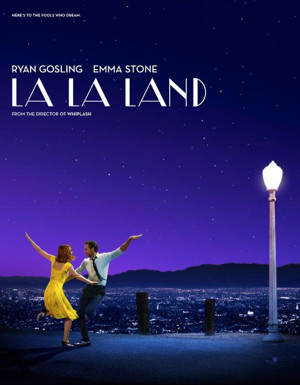
La La Land - is it a musical?

To say that La La Land has generated a lot of hype is to hugely understate the excitement that followed the release of this film earlier this year.  With 14 nominations and 6 wins at the Oscars in February, Hollywood agreed (though perhaps not to the extent some were initially predicting - the clean sweep did not happen and Ryan Gosling got no award).  Every year it seems which ever film is the big release is predicted a clean sweep - never ever happens though.

The film's title is a neat play on words - the telling a tale set in Los Angeles in a whirlwind of excitement and pastel-colour flourishes that's dizziness-inducing for its doe-eyed wannabies.  It's a story that's as old as the film industry itself, Sebastian (Ryan Gosling) and Mia (Emma Stone) are Hollywood hopefuls looking for their big break.  She wants to create her own stage show.  He wants to run his own jazz club.  It's a story and a style of film making that harks back to the Hollywood golden age, with set-piece song-and-dance numbers, bold colours and a love story between forged out of the fires of Singin' in the Rain.  One can see why the Hollywood establishment loved it so, its opening sequence revels in the outlandish prospect of choreographing a full-on dance number amongst the motionless traffic of a Californian freeway.

Though I don't want to burst its bubble too harshly, I was not taken in by La La Land anywhere near as much as I was hoping.  It's a film with a very distinct split between its acts.  The opening act is 100% musical, but the second half drifts in a very different direction.  It's hard to discuss this too much without spoilerising everything, but the story drifts into territory that's a bit too real for my liking.  It's very difficult to come to terms with a shift in tone that sees us go from spinning dresses and outlandish choreography to the harsh realities of seeing a romantic relationship come under real world stress.  Is this meant to be a fantasy or not?

You could argue that the film is an indictment of the Hollywood dream - that's it really is completely 'la la' in its unrealism, of course there can be no real happily ever after when a relationship is based on singing a song together once under moonlight.  But I don't remember this happening to Gene Kelly and Debbie Reynolds, so La La Land isn't really a throw back to the golden age of 1950s Hollywood musicals.  It is something else entirely.  Is it more a 21st century reboot of that genre?  Well maybe - but you kind of have to end on a curtain close and a kiss or the audience wants its money back.  You don't go to a musical for the realism after all.  When you come around to this way of thinking the film has much less of a gloss attached to it.

Director Damien Chazelle has very quickly become a Holywood darling.  His directorial and writing range extends across a wide range of genres in a very short career to date.  He could take his talents anywhere and into any field.  This I guess was his attempt to do a stage musical.  The results are enjoyable in the extreme, but as a viewer you will either go with the 21st century spin or you won't.  I didn't and I was left feeling rather flat by the entire final act.  Given the film had so much Hollywood hype I could hardly believe to see it end on such a misstep.

I'm not upset, just disappointed.