Monday, 16 November 2009

An Education

Lots of people in the film media have been getting very excited about this, a new British artsy film about growing up in the 1960s. Clearly you would expect the cinemas to be all over a British film with an up-and-coming young actress? Wouldn't you? Well only the Vue cinemas around my way had it on. The pit of despair that is the Bracknell Odeon will probably have it on the "director's chair" in 5 months time - epic fail.

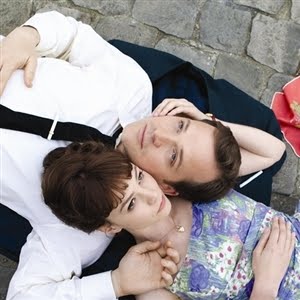
Well I'm glad I went to the trouble of driving into Reading on a Wednesday after work for this fantastically acted and character-driven story a sixteen-year-old in the early 1960s who thinks she knows a lot, but learns she knows nothing. The heroine of the film is Jenny - played without fault by Carey Mulligan. She is a young girl on the up in a male-dominated world. She aspires to go the university, she has supportive and surprisingly liberal parents and has used her intelligence and charm to make herself one of the popular ones in school. She appears to come from a family who are not hard-up, but who have had to work hard for what they have and clearly appreciate their current lifestyle. A chance encounter with an older man (David – played by Peter Sarsgaard) changes this.

Suddenly Jenny (and her parents too) is swept off her feet by David's charisma, experience, knowledge of the world and money. Suddenly she realises that there's no point in getting an education if all it is going to mean is a long and difficult life working for not much. Why not have it all now - just as David offers? Jenny's parents are carried along for the ride too. In an age when the prevailing method of bringing up a girl was still to find a man to marry her off on to, even Jenny's father agrees that there's no point her going to Oxford any more.

Through this story the film asks some really interesting questions about modern British society. What is the point of getting educated if all that is going to happen to you is that you end up with a dead-end job? Why not try and live a life that's fast and loose while you're young? As Jenny asks of her headmistress, "you have to tell us what education is for!"

A big theme in the film is how people act out of convenience, how we can ignore obvious truths when it suits us to avoid reality. Jenny ignores David's obviously criminal activity, David's friend ignores the stunning stupidity of his girlfriend because she's hot and he's attracted to her, Janny's teacher Miss Stubbs lives in denial that the girls she teaches appreciate what she does and Jenny's parents ignore the obvious and slightly worrying age gap between her and David because he's a charmer and clearly well-off. I guess that in this way the film is about compromises that people make in. How far will the characters go in deluding themselves in order to have a trouble-free and enjoyable life? Will Jenny throw away the promise of her youth in search of fun and wealth?

One big drawback of the film was a terrible montage ending that neatly wrapped everything up in 2 minutes. The film could have ended much more satisfyingly a few minutes beforehand - still on the same note but not feeling rushed. This is a fairly minor point though compared to everything else. 'An Education' is funny, intelligent and fantastically acted by a great cast. British film of the year anyone?

Tuesday, 10 November 2009

Office Space - Printer Death

Office Space is a great comedy. Written and directed by Mike Judge - the creative force behind Beavis and Butthead - it captures the mindless grind that is the modern office environment where management buzzwords and meaningless figures generate alienation in the workplace in a very Marxist sense. Our heroes take out their anger at the system on a printer:


The first time I saw this I almost choked from laughing. There's loads more great stuff in the film too, including a couple of great performances from supporting cast members as various parts of the office's human machinery. All except Jennifer Aniston though, she is distinctly unmemorable as usual.

Monday, 9 November 2009

The X Files - I want to believe (I really did)

This came out ages ago, but I was kind of living in denial by not watching it. You see I am a big fan of the X-Files as it was. As I described in my post from a few months ago, the X Files was a seminal television series that combined great writing with episodic drama. It fitted in with the prevailing political mood of its time; it was perfectly suited to the mid 90s paranoia and governmental distrust in the western world.

I'm sad to say that this new film is a bit of a fail. There are too many nods to the original series to make it interesting for a casual viewer, and those nods are generally referring to events that took place in the final few seasons - when the series totally lost the plot - which alienate the hardcore fan too. I admit that there are a few nice touches for the avid fan - the mention of Luther Lee Boggs was particularly good - but they just highlighted how much this film really wasn't needed. When Skinner turns up near the end and helps out I think I was meant to rejoice at the return of a great character; I just sat there in the realisation that I hadn't seen him in anything since the X Files finished. Maybe he wasn’t a very good actor after all?

I turned my DVD player off thinking that they'd managed to miss what could have been a good opportunity to introduce this classic series to a new generation. By having a plot that looked more like a long 'paranormal event of the week' episode rather than reanimating the monster that is the alien conspiracy arc, they had a good chance to reach a non-fanboy audience. It just didn't work though.

What they should have done was gone for a slightly revisionist approach. Why not set the film in the middle of the original series, a new previously unseen case? Anderson and Duchovny don't look that much older so it wouldn't have been too much of a stretch. The producers might say that they didn't want to retread old ground; but then why make this film at all? At least then we wouldn't have to put up with the painful memory of the series' demise in its 8th and 9th seasons.

I've started watching my season 1 DVDs in protest.

Thursday, 29 October 2009

Zombieland - a lesson for nerds everywhere

Zombieland is a spectacularly funny film. Whether you're an old hand at zombie genre movies or a newbie looking for a giggle, it's for you. The film is mostly a comedy with a couple of jumpy bits chucked in to remind you that it's a zombie film. Over 90 minutes we follow the nerdy and introverted 'Columbus' (I don't remember if the main character's real name is ever revealed), his chance meeting with the lunatic zombie-killing hick 'Tallahassee' (Woody Harelson) and their adventure across America with two sisters trying to get to a funfair in California - the sisters are also known only by the places they're trying to get to. Columbus has a series of rules for surviving the zombie apocalypse - which is pretty funny in itself. Throughout the film the rules appear on screen as he and Tallahassee fight their way unscathed past hordes of zombies. Nice.

That's just one of many nice touches in Zombieland, touches that include some wonderfully detailed sets and quality black humour moments like a pair of arms stuck to a steering wheel. The best comedy bit is the appearance of Bill Murray in the middle; I knew that was coming, but it was far funnier than I had imagined. To be honest I was in my element in the opening montage, in which slow-mo zombies chase people around in stunt-man's heaven while 'For Whom the Bell TOlls' by Metallica plays. There was no way I wasn't going to enjoy myself after that.

So what of the plot? I really don't get on with films without plots. Although on the surface the film is simply a series of blackly comic set-pieces, there is in fact a very simple and enjoyable story going on. It's a story about a lonely nerdy guy - Columbus - and his coming of age via some extreme violence, finding a girl he kind of likes and - of course - surviving a zombie apocalypse. It delivers an important message to the nerds of the world; keep on wearing your seatbelt and doing your cardio exercises, cos when the zombie apocalypse comes and all the other guys in the world have been eaten, the chicks will have to make time with you then.

Overall - it's a great comedy with a lot of heart. Although it's not quite as good as 'Shaun of the Dead' (what is though?), it's certainly going to find itself high in my movie of the year chart.

Friday, 16 October 2009

Deliverance - the duelling banjos

Although Deliverance may be a quality thriller about racism and middle class fear in modern America, it also has once of the great (and much-parodied) all-time scenes. In this scene the city dwellers arrive in a small redneck village trying to buy travel out into the countryside. They look on in dismay at the 'genetic deficiencies' of the locals, and then this happens:


It's a scene that embodies the central point of the movie, that although the middle class white collar city dwellers may think themselves a cut above these yokels; they actually don't have a clue about these people or their lives. In fact their opinions of and fears about them are nothing more than racism.

And it's some wicked cool music too.

Rosemary's Baby - a classic thriller

One of the great things about cinema is that there's such an extensive back-catalogue of films you can never say you've seen it all. There's always something new to discover, always a new 'classic' that you've never previously heard of or considered worth investing time in. So it was with 'Rosemary's Baby', recommended to me by a computer algorithm on the Amazon website a number of times, I finally bothered to read the synopsis and decided that this was a film I had to see.

As a cult 1960s classic about devil worship in New York City, it sounds like the sort of film that should be firmly placed in the cannon of the horror genre. Perhaps it is, but it's a film that had never been on my radar until just recently; I wonder if there is a cult of horror fans out there who like to hoard all these classics to themselves and never tell other people about them for fear of making them mainstream. They shouldn't worry, I don't think this is a film that would ever be able to survive for too long in mainstream consumption - it's far too subtle and psychedelic for that.

The plot revolves around a woman - Rosemary, played by Mia Farrow - her pregnancy and her increasing paranoia that a satanic cult exists in her block of flats and is planning to steal and kill her child. This is a story that works on number of levels. Firstly there is Rosemary's fear of losing her baby - a terrifying concept for pregnant couples to entertain. Secondly there is Rosemary's fear that those around her are out to get her. From her neighbours to her doctor and her husband, is her fear born out of delusion or is it real? Thirdly there is the fear of going mad. How do you prove that something you know to be real - but sounds absurd - is truth rather than fiction? How do you convince people you are not mad. Lastly there is the fear of the unknown. This is first time she has been pregnant, she has no idea what it is meant to feel like. When her neighbour gives her a special 'tonic' drink which gives her permanent stomach cramps, who is she to disagree with the assertion that this is perfectly normal?

It's this primal fear that drives the film along. There is one early scene in which our main character hallucinates (or does she?) being raped by a demonic creature, but aside from that all the tension comes from the awkwardness that Rosemary's neighbours and doctors show towards her. What are they hiding? Why are they hiding it? Are they really witches? Is Rosemary going mad? Will anyone believe her?

The ending is very satisfying and I am not going to give it away here. It certainly made the rest of the film worthwhile. If anyone has any cult movie recommendations that may have passed the mainstream by let me know - I'm going to be seeking more out in the near future.

Thursday, 15 October 2009

Import / Export

Once again I got sent a film that somehow got put on my LoveFilm list without me remembering. As with all of these things they generally come from me listening to Mark Kermode on the radio and deciding to check out whatever strange arthouse weirdness he has decided is the best film of the week. By the time these films actually get sent to me I have no idea what they are about again, so looking it up on imdb revealed to me that this was a tale of two people, one going east and one going west, and their lives. Hmmm.

With this extraordinarily worthy-sounding synopsis lodged in my brain I sat down to Import/Export's slightly-more-than 2 hours. Whenever I watch an arty film I'm always slightly aware that I'm going to get something different to the norm, but I wasn't quite expecting what this film offered up. Within 20 minutes of the start there are some pretty explicit sex scenes. I don't just mean explicit, I mean explicit. The lead 'going west' character - a Ukrainian girl - goes and works in an online sex parlour and has to interact with some seriously nasty sounding characters over the internet. Later in the film the 'going east' character - an Austrian who is a jobless arsehole - hires a prostitute when he arrives in Ukraine; she looks well underage. The scene where his father gets her to curse herself in German is very disturbing and - once again - explicit.

So was there any point to all this? Well I recon it's all about the different ways that people act and react towards people from different social strata and different places in the world. Reading around a little on the imdb of other people's reactions to the film, there is a feeling that it's trying to highlight the way the people from Eastern Europe might sometimes be treated as second class citizens in the western world. I have sympathy for that point of view, since the two main characters are an Austrian man and a Ukrainian woman. He is a layabout who mistreats his girlfriend, she is a trained nurse. He travels east and with his little money can get what he wants; she travels west and can only get work as a cleaner in an old-people's home.

I am pleased I saw the film, as the major point it's making is a valid one, and one that I should probably give more time to thinking about. I'm not necessarily going to recommend it to everyone though, as it's very heavy and depressing (every scene in the old people's home is heart-wrenching). Also, if you're easily offended by really explicit sex scenes you'll probably want to give it a miss.